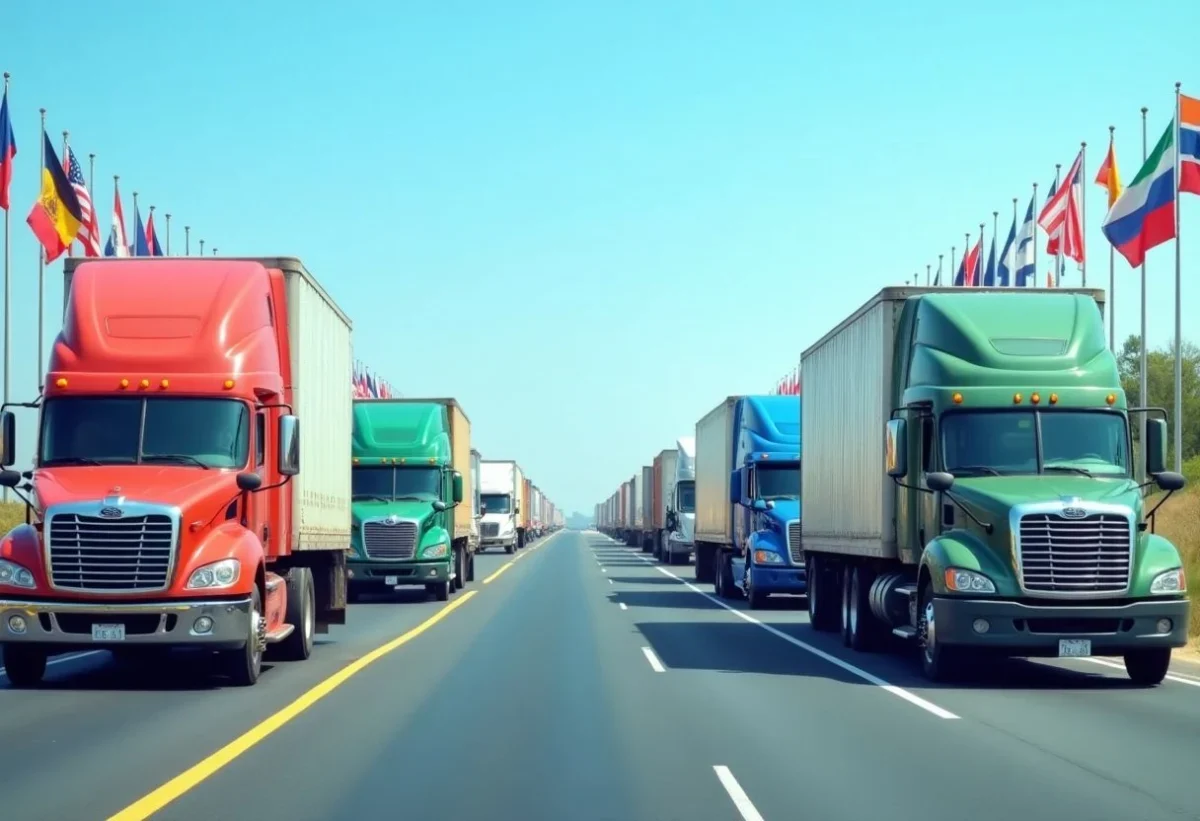
The world of freight transport between France and England is a complex web of networks, routes, and customs procedures. This field, which extends the commercial history of two great nations, is an essential pillar of modern trade. Behind every imported or exported product lies a sophisticated infrastructure designed to meet the demands of a constantly evolving economy. Between the ports, airports, and the legendary Channel Tunnel, the transport of goods is the result of a ballet orchestrated by seasoned professionals.
Understanding the main modes of transport
England benefits from a strategic geographical positioning that significantly influences the logistical choices of carriers. The three main modes of transport used are road transport, rail transport, and maritime transport. Each of these modes has its own characteristics and advantages, contributing to the efficiency of goods delivery.
Road transport remains the preferred choice for short distances and the flexibility it offers. British road infrastructures are well-developed, allowing quick access to different regions of the country. Companies choose this mode for its ability to deliver directly to retail points.
Rail transport is gaining popularity due to its reduced environmental impact. This choice also proves to be economically advantageous for transporting large volumes. The well-integrated British rail network ensures an efficient link between major industrial areas.
As for maritime transport, it is essential for bulky or heavy goods. British ports, such as Southampton and Liverpool, are key hubs for international trade, especially for exchanges with France.
The logistical challenges of Brexit
Since the implementation of Brexit, the landscape of transport between France and England has changed considerably. This has introduced new customs procedures, increasing the complexity of operations for carriers.
- Customs formalities: Companies must now adapt to heavier administrative processes and manage new regulations. The time required to process customs documents has significantly increased.
- Increased costs: With Brexit, transport-related fees have risen, impacting the competitiveness of businesses. Customs duties and other related charges represent additional financial hurdles.
- Additional delays: Enhanced border controls lead to delays that must be taken into account during logistical planning.
Technology and innovation in transport
To face new challenges, transport companies in England have had to invest in innovative technologies. The integration of digital solutions now plays a crucial role in improving logistical efficiency.
GPS tracking systems and fleet management software allow for optimization of routes and increased transparency for customers. These tools enhance the security of goods and facilitate real-time inventory management. Furthermore, the use of Artificial Intelligence and machine learning helps forecast market trends, enabling better anticipation of needs.
The role of carriers in the English economy
Carriers play a key role in the functioning of the English economy, ensuring the vital link between producers and consumers. Without them, the supply chain would be inefficient, even paralyzed.
The carrier in England must navigate through a changing environment, marked by new policies and increasing demands for sustainability. Its ability to adapt and innovate is a valuable asset.
Finally, cooperation between governments and private enterprises remains essential to overcome logistical obstacles and maintain the fluidity of exchanges. This includes modernizing infrastructures and harmonizing regulations to facilitate cross-border trade.