The furniture and home décor market is undergoing a period of change. The furniture EPR scheme, whose 2024–2029 specifications strengthen repair and reuse targets, is reshaping the supply channels available to consumers.
At the same time, the Bâti sobre programme, presented by ADEME in October 2026, sets out lessons learned from reusing materials in homes. Creating a stylish home is no longer just about choosing a sofa or a wall colour: durability, repairability and a cohesive look from room to room are playing a greater role in purchasing decisions.
Furniture repairability: the factor catalogues overlook
Most home décor guides focus on a piece of furniture’s material, colour or style. These factors matter, but they don’t tell you how long the item will actually last.
A piece of furniture with fittings, hinges or legs that can be replaced individually will last years longer than a glued or stapled model—even if the latter is made from wood marketed as premium. Repairability has a far greater impact on longevity than the material listed.
Before buying a table, chest of drawers or bookcase, check a few practical details to tell durable furniture apart from disposable pieces:
- Are the joints screwed or dowelled rather than simply glued? Mechanical joints make it possible to dismantle the furniture and replace damaged parts.
- Does the manufacturer offer spare parts (handles, drawer runners, tabletops)? Availability over several years is a strong sign of quality.
- Can the coating or finish be sanded and refinished? A solid wood tabletop can be restored, while damaged laminate is rarely repairable.
Specialist home décor and furniture platforms such as in-et-out.fr let you explore a wide range of products and compare their technical specifications.

Reuse and reclaimed materials: plan before decorating
Reusing materials in the home is gaining credibility. The lessons learned from the Bâti sobre programme, presented by ADEME in October 2026, set out a three-step approach: take stock of existing items, plan their removal and storage, then check that they are suitable for their new use.
For homeowners renovating a living room or bedroom, this approach has practical benefits. Before sending everything to the recycling centre, identify what can be kept or repurposed. This avoids unnecessary purchases and can produce more distinctive results than anything in a catalogue.
What’s easy to reuse at home
Old doors, floorboards, cement tiles and brass handles are all well suited to reuse at home. Their patina adds a texture that new materials struggle to replicate.
Taking inventory before work begins helps prevent last-minute decisions and waste. Store salvaged items in a dry place, clean them and check their structural condition (for example, make sure there is no mould and that the joints are sound). These steps are essential for successful reuse.
The 2024–2029 specifications for the furniture EPR scheme are also helping to structure the second-hand furniture market. Furniture reuse is becoming an organised sector, with collection, refurbishment and resale channels that go beyond the occasional Sunday flea market. Buying a sideboard or table through these channels offers more assurance about its condition than a private sale with no inspection.
Colours and materials: create a look for each room
Choosing colours for your home is less about following an annual trend and more about understanding the space. A room’s natural light, size and purpose determine which shades will work day to day.
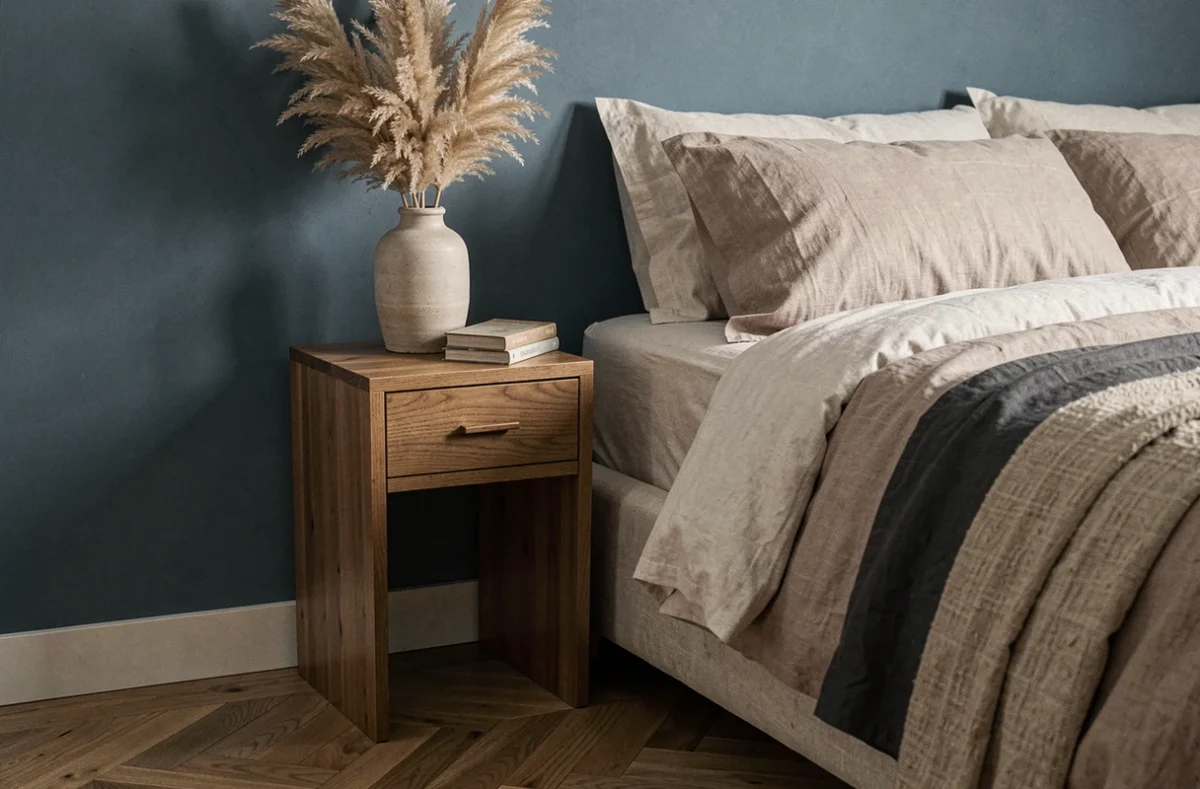
A north-facing room gets cool, diffused light. Warm shades such as terracotta, ochre and linen help make up for the lack of direct sunlight. By contrast, a sun-filled room can take deeper or darker colours without feeling cramped.
Pair materials and colours without making everything match
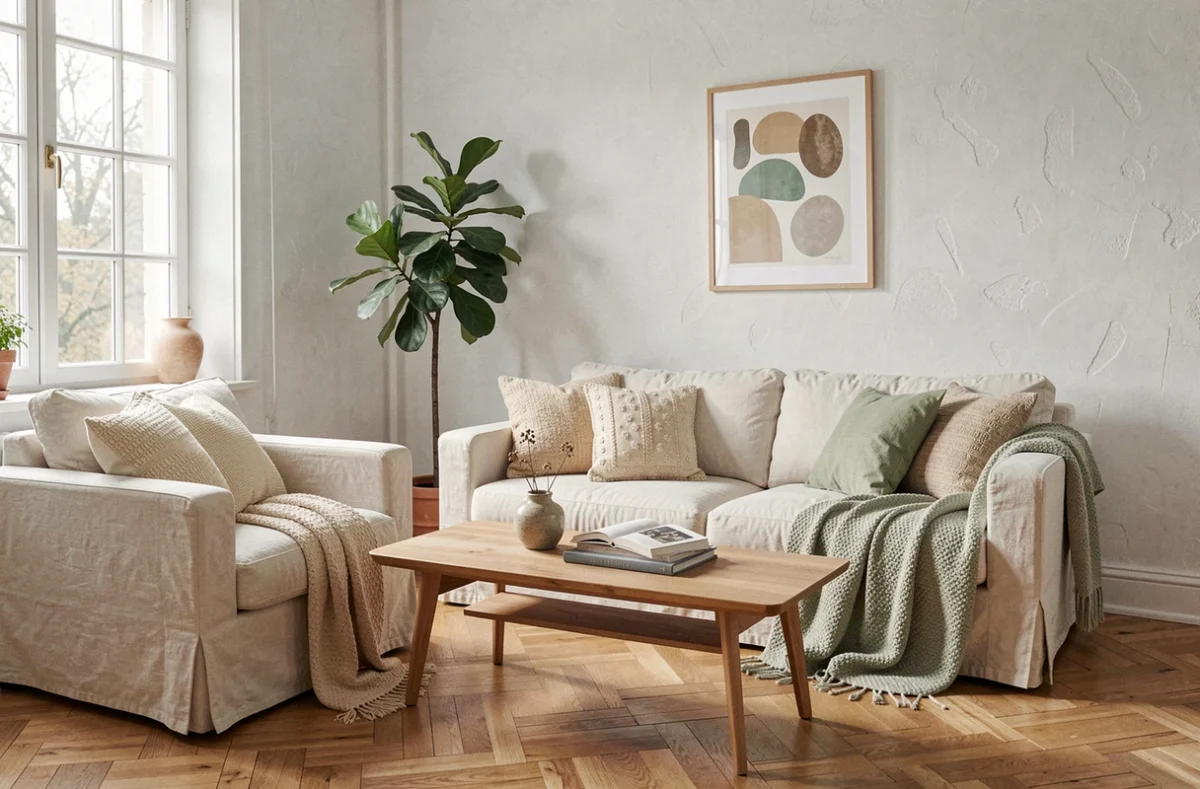
Limiting each room to three dominant materials creates a more cohesive look than mixing six or seven textures. For example, a living room can combine wood, linen and metal without feeling disjointed.
A cohesive look from room to room doesn’t mean repeating the same design. A common thread—such as a colour, material or style of handle—is enough to visually connect a hallway, living room and kitchen. The rest can vary.
Indoor lighting: layer three types
Lighting remains one of the most overlooked elements of interior design. Even a well-furnished, freshly painted room can feel dull or uncomfortable if the lighting isn’t right.
A functional room combines three layers of lighting:
- Ambient lighting (ceiling lights, pendants) provides overall visibility. On its own, it’s never enough.
- Task lighting (desk lamps, reading lights, under-cabinet lights) illuminates specific activity areas. Its placement should reflect how the room is actually used, not a standard layout.
- Accent lighting (table lamps, string lights, indirect LED strips) adds depth and visual comfort in the evening. It’s often the layer that transforms how a space feels.
Layering all three types of lighting can transform a room more than replacing the furniture. A dimmer on the ambient lighting makes it easy to switch from a work setting to a relaxing atmosphere without changing the bulb.
Colour temperature matters as much as brightness. Living spaces such as lounges and bedrooms benefit from warm light, while a home office or work surface needs more neutral light for extended visual comfort.
Creating an interior that stands the test of time comes down to practical choices: check repairability before buying, take stock of what can be kept during a renovation, choose colours to suit the actual light in each room, and layer your light sources. These practical decisions may be less eye-catching than a social media mood board, but they deliver results that last beyond changing trends.