
Exploring the depths of the oceans is a fascinating adventure that reveals an unsuspected world. Marine animals, in their incredible diversity, constitute a universe of their own, where every encounter is a wonder. Scientists and sea enthusiasts venture beneath the waves to better understand these creatures, establish new classifications, and discover previously unknown species. This complex ecosystem, essential to the health of our planet, is also vulnerable, threatened by human activities. Each underwater expedition brings a wealth of knowledge and a renewed call to preserve these natural treasures.
The Secrets of the Depths: Meeting Marine Biodiversity
The oceans, covering more than 70% of our Earth, remain largely unknown, with only 10% of their seabeds accurately mapped. The deep sea is the stage for a thriving biodiversity, where every scientific expedition can lead to the discovery of new marine species. From Australian marine parks to underwater mountains, the variety of habitats is vast, and the species that inhabit them are as diverse as Dogs & Cats in our terrestrial homes.
Scientists, these modern explorers, dive into the unknown to better understand and protect this marine world. A recent expedition led by the Museum Victoria Research Institute, aboard the research vessel Investigator, operated by CSIRO, explored the Cocos (Keeling) Islands, revealing potentially new species for science. These underwater journeys are essential for documenting the life hidden in the abyss and for raising awareness of the need to preserve these ecosystems.
During these missions, the underwater mountains, geological remnants from the Late Cretaceous, prove to be true oases of life. The production of three-dimensional images during the expedition highlighted the complexity of these structures and the richness of the life they harbor. The Australian marine parks directly benefit from this data, which aids in their management and the preservation of their unique biodiversity.
The pursuit of this research is crucial. Indeed, each new species discovered brings a wealth of knowledge about the adaptation and evolution of marine animals in extreme conditions. These discoveries also open up perspectives for understanding the environmental impacts of human activities on these fragile ecosystems. Marine science stands as a fundamental pillar in the fight for ocean conservation and the diversity of life they contain.
The Sentinels of the Ocean: Role and Importance of Marine Animals in the Ecosystem
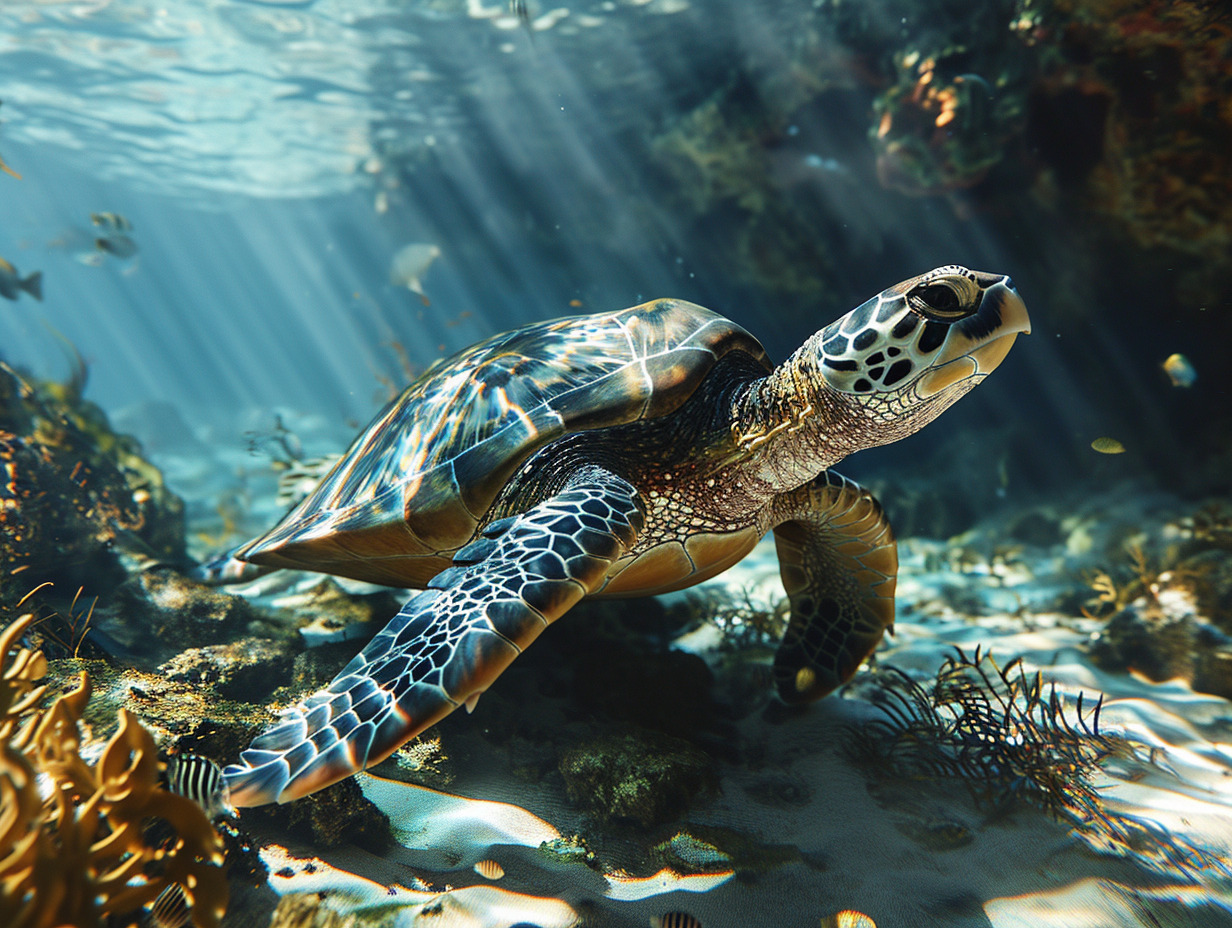
At the heart of marine ecosystems, marine animals play fundamental ecological roles. Consider whale sharks and sea turtles, these silent guardians who maintain the balance of marine habitats. These species, through their predation or grazing activities, regulate prey populations and thus contribute to the health of coral reefs and seagrass beds. Their presence is an indicator of the richness and resilience of the ecosystem.
The diversity of species, as highlighted by scientists during recent expeditions, underscores the complexity of interactions within the marine ecosystem. From dolphins to hybrid fish, every living being has its ecological niche, its survival strategies against predators, and competition for resources. Dianne Bray, senior curator of collections at Museum Victoria, commented on the remarkable adaptability of these animals in the face of a constantly evolving environment.
Human activities, such as industrial fishing, maritime traffic, and pollution, exert unprecedented pressure on these species and their habitats. The environmental impact of these actions threatens ocean biodiversity and, by domino effect, the overall health of the oceans. The underwater mountains themselves, accurately mapped by hydrographers like Nelson Kuna, are threatened by these anthropogenic disturbances.
Marine conservation must be a priority. Organizations such as Parks Australia use data from scientific expeditions to guide the management and protection of marine parks. The mission led by Dr. Tim O’Hara, and his discoveries, provide the necessary knowledge to develop effective preservation strategies. Protecting the sentinels of the ocean means preserving the entire marine life chain.