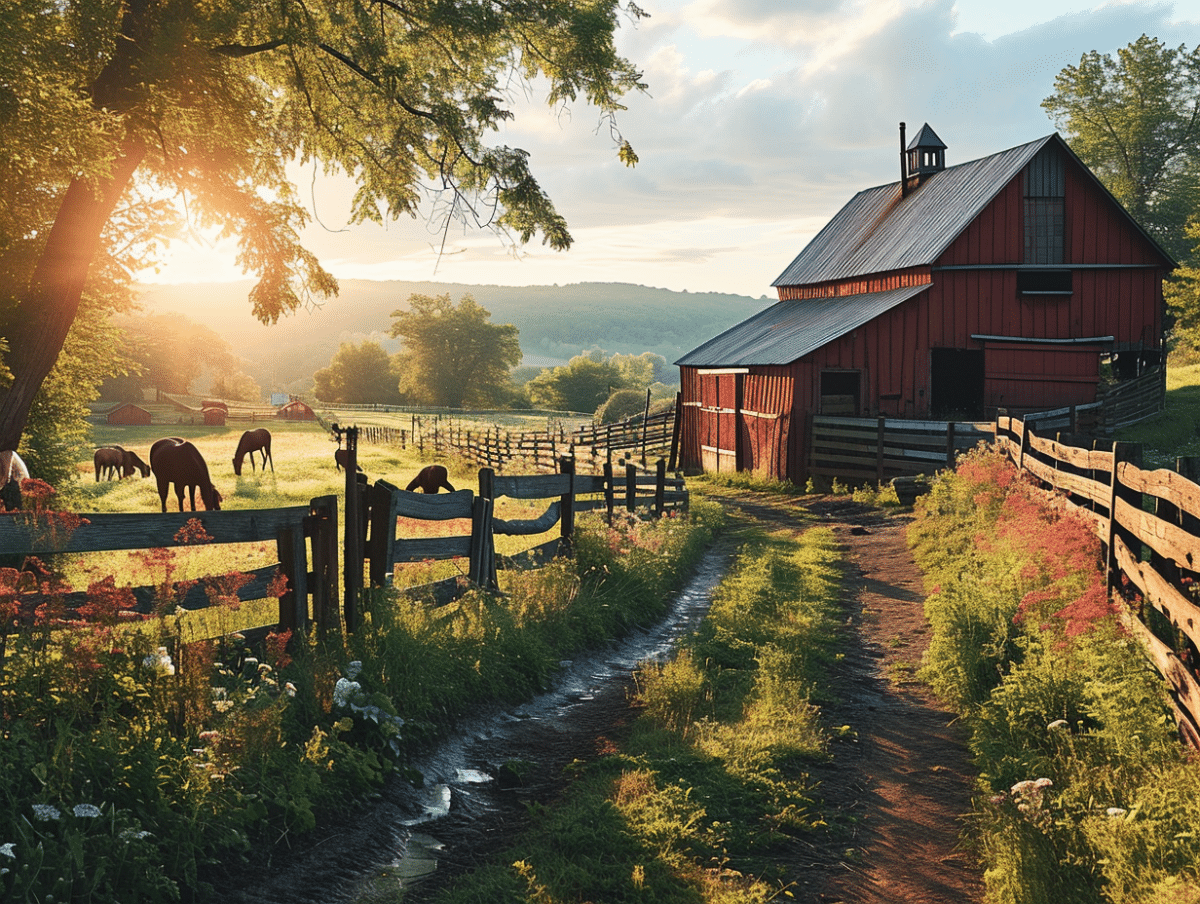
In the heart of lush expanses and bucolic landscapes, rural tourism offers a charming escape from urban frenzy. This form of travel emphasizes immersion in the tranquility of agricultural areas, where the traditions and authentic lifestyles of local communities are celebrated. Visitors have the unique opportunity to get closer to nature, participate in agricultural activities, and savor fresh products directly from the regions they explore. It is an invitation to slow down and reconnect with the cycles of the earth, an experience that is often enriching and rejuvenating.
Rediscovering the Charms of Rural Life
Rural tourism, a growing concept, is adorned with a variety of commercial accommodations tailored to this increasing demand. From charming guesthouses nestled in the beating heart of villages to nature campsites that blend into the green embrace of the countryside, the choice is vast. Unusual accommodations, such as treehouses or caravans, open a new path in countryside tourism, offering unique experiences in harmony with nature.
These accommodation options, ranging from tourist residences to village campsites, are part of an underlying trend: the quest for authenticity and a return to roots. Farm stays, for example, not only offer a stay in nature but also an immersion in agricultural activities, allowing visitors to understand and participate in rural life. Le Blog Voyage highlights these initiatives as vectors of social connection and knowledge sharing.
The rise of brands such as Center Parcs reflects the growing appeal of countryside vacations. However, the growth of countryside tourism does not come without challenging traditional accommodation capacities: hotels and other structures must adapt to meet this varied demand. The commercial accommodation sector is thus adapting by offering innovative tourism products.
The relationship between unusual accommodations and countryside tourism is symbiotic: the former offer new perspectives for countryside vacations, while the latter renew interest in regions that are sometimes overlooked. The facts are clear: rural tourism is non-commercial and chosen, thus adapting to a demand seeking meaning and stronger human connections. Note that the commercial accommodation sector is adapting to this reality, offering examples of new tourism products that leave a mark on the minds and hearts of travelers.
Impact and Challenges of Rural Tourism for Local Communities
Rural tourism is not just a passing trend; it is part of a sustainable tourism and slow tourism approach, having significant repercussions on local communities. The countryside destination becomes a lever for economic development, capable of revitalizing regions often neglected by public policies. Tourism funding, especially when directed towards environmentally friendly and locally heritage-respecting projects, plays a crucial role in the sustainability of rural initiatives. Consider the Government’s Sustainable Tourism Fund, which actively supports slow tourism projects, reflecting this trend towards more conscious and respectful tourism consumption.
Digital companies such as Booking and Airbnb have also seized the opportunity of rural tourism by offering stays that promote interaction with local life, while contributing to the financing of the restoration of French regional heritage. This synergy between online platforms and local actors creates an ecosystem where the economic benefits are directly advantageous for rural communities. Consider the Green Key 2022 label, which recognizes accommodations and restaurants engaged in an ecological and social approach, as a quality indicator guiding travelers towards more sustainable choices.
Beyond the economy, rural tourism influences the identity and cohesion of territories. Slow tourism initiatives encourage the valorization of local know-how and the preservation of traditions, while contributing to the environmental education of visitors. Organizations such as Atout France and ADN Tourisme play a crucial role in promoting and supporting these forms of tourism that respect and enrich the local fabric. The stakes are clear: rural tourism must be part of a sustainable and participatory development logic to become a driver of positive change in the countryside.