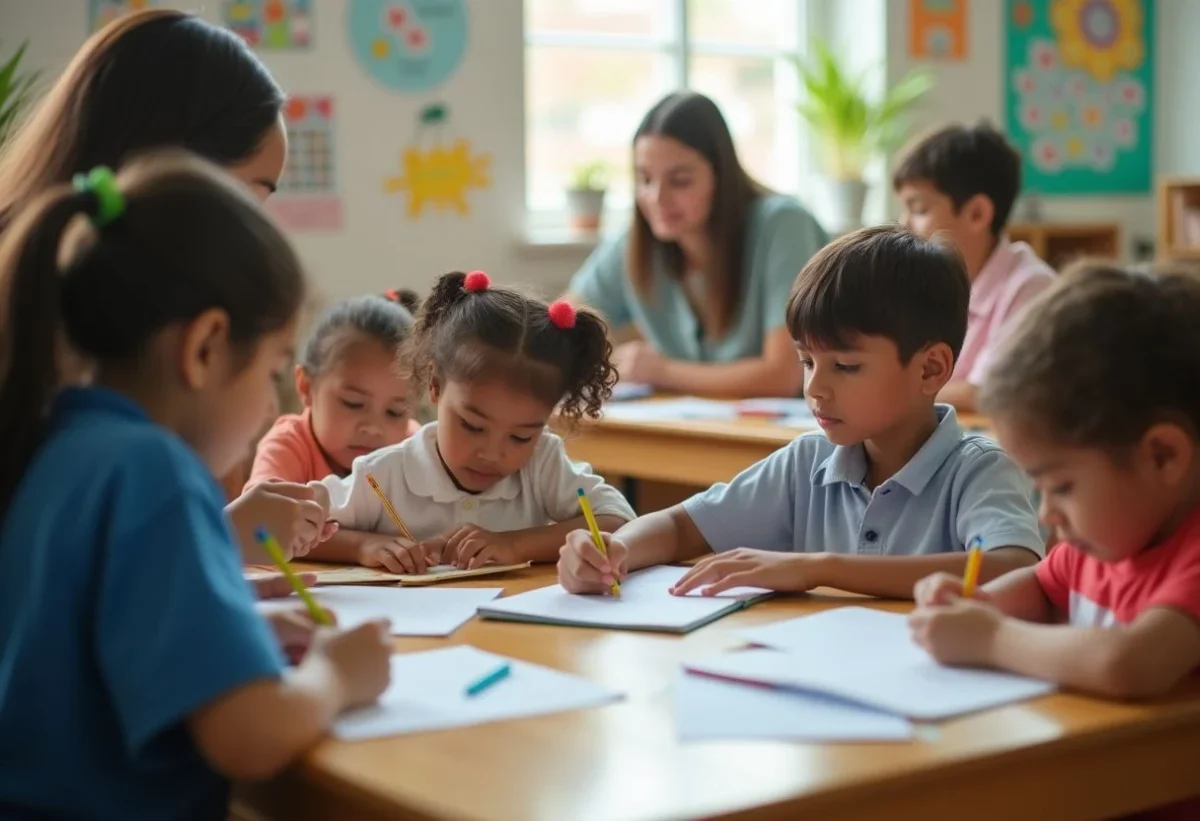
The transition from CP to CE1 marks a crucial step in the educational journey of young students. It is at this moment that children begin to consolidate their skills in reading, writing, and mathematics, while exploring new concepts. During this pivotal period, the role of exercises is essential, as they help reinforce learning and develop various skills. Teachers, parents, and students must all collaborate to make this learning a sustainable success. By considering the different aspects of CE1 exercises, everyone can contribute to creating a stimulating and effective learning environment.
Understanding the objectives of reading exercises
Reading is a fundamental pillar of learning in CE1. Children must learn to read fluently and understand the meaning of texts. This requires a set of varied and adapted exercises.
The reading exercises should be designed to improve reading fluency. This often involves repeating simple texts and working on phonetics. Children start with short sentences and gradually increase the complexity of the texts. This repetition helps to build students’ confidence in their reading ability. The goal is to achieve a comprehensive understanding of the texts, which will allow them to read with a good pace and appropriate intonation.
- Reading aloud to improve articulation and intonation.
- Comprehension questions to ensure proper assimilation of the text.
- Role-playing games based on the content of stories to bring words to life.
Stimulating writing and the development of creativity
After consolidating the basics of reading, writing becomes a space for creativity where children express their ideas and emotions through words and sentences.
The writing exercises in CE1 are designed to encourage personal expression. One approach is to propose various themes around which children can build sentences, then paragraphs. For example, an exercise might invite the student to describe a day at the beach or their favorite season. These short narratives help structure thought and enrich vocabulary.
- Writing short stories to explore imagination.
- Frequent dictations to improve spelling and grammar.
- Rewriting workshops that allow students to refine their texts.

Mathematics: logic and problem-solving
Mathematics in CE1 is an extension of the knowledge acquired in CP. Students tackle more abstract concepts that require logical understanding and regular practice.
In this school year, children are introduced to mathematical concepts such as two-digit addition and subtraction, as well as the recognition of basic geometric shapes. Teachers use various tools and methods, such as math games and hands-on activities, to make these concepts more accessible. CE1 exercises are designed to encourage students to approach problems analytically. To delve deeper into these methods, you can consult specialized resources in mathematics with CE1 exercises.
- Using board games to teach numbers and calculations.
- Simplifying problems to develop logic.
- Hands-on activities and manipulation workshops for tangible understanding.
The role of parents and teachers: essential collaboration
Adults play a key role in supporting children throughout their CE1 year. Their support and involvement are crucial in helping children overcome the challenges of learning.
Parents can encourage daily learning through fun and educational activities at home. This could include reading stories before bed or math games during car rides. For teachers, it is essential to create a nurturing classroom environment where children feel confident to ask questions and make mistakes. Regular communication between parents and teachers is also fundamental to identify the specific needs of each child.
The first year of primary school is a significant period that lays the foundation for children’s intellectual development. Well-designed CE1 exercises are valuable tools that help children thrive and prepare for future challenges. Their effectiveness relies on a harmonious combination of structured exercises, encouragement, creativity, and parental support.