
You own a cellar attached to your home, or purchased separately in a building. Every autumn, the property tax arrives, and the question arises: does this cellar figure in the calculation? The short answer is yes, in most cases. The useful answer requires understanding how the tax authorities evaluate this type of space and, above all, how to verify that this evaluation corresponds to reality.
The weighting coefficient applied to cellars
The property tax is based on the rental value according to the land registry of the property. To calculate it, the administration measures the actual area of each part of the space, then applies a weighting coefficient based on the nature of the space. A living room carries significant weight. A cellar, much less.
In practical terms, a cellar is classified as a built dependency. Its coefficient is significantly lower than that of a main room. This means that a ten-square-meter cellar will count for a much lower weighted area in the calculation of the rental value.
The principle of the cadastral calculation compares the utility of each space. A living room is used for living, a cellar is used for storage. The tax authorities translate this difference into weighted area, and it is this weighted area that enters into the tax base.
There is a resource that explains in detail the property tax applicable to a cellar and the various scenarios encountered by property owners.
Cellar attached to the home or isolated cellar: two tax situations
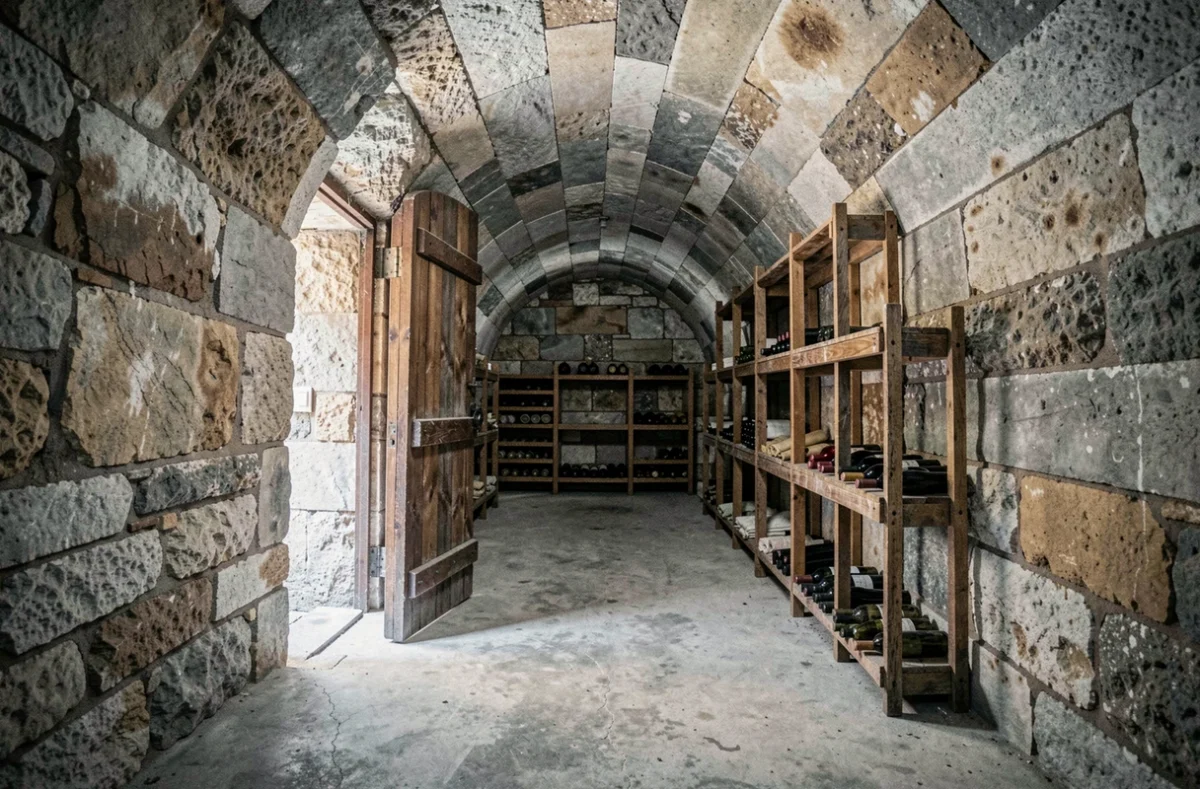
The determining factor is not the cellar itself, but its fiscal attachment to the main property. Two cases arise.
When the cellar is part of the same lot as your apartment or house, it is treated as an integrated dependency in the cadastral evaluation of the home. Its weighted area is added to that of the other elements to form the overall rental value. You do not receive a separate property tax notice for the cellar: it is included in that of the home.
When the cellar is a separate lot (purchased independently, with a different lot number in the co-ownership regulations), it may be subject to autonomous taxation. This is the case described by some Parisian owners who acquired a cellar alone and sometimes received no notice for years, due to incorrect attachment in the cadastral files.
This absence of notice does not mean exemption. The tax authorities can claim the amounts due for several years once the property is identified. The tax prescription for property tax applies, but recovery remains possible for the non-prescribed period.
Property tax on a cellar: check the cadastral data
Since the generalization of online occupancy declaration, each owner can consult their properties in the “Real Estate” section of the impots.gouv.fr website. Dependencies, including cellars, are normally listed there.
Have you ever noticed a discrepancy between what you own and what appears in this service? This is common. Several types of errors can affect your taxation:
- The cellar is absent from the cadastral data, which delays taxation but does not prevent subsequent recovery
- The recorded area does not correspond to the actual surface area, inflating or reducing the rental value
- The cellar is attached to the wrong lot, for example, assigned to a neighbor or counted twice in the evaluation of a home
Any inaccurate data can be contested with the property tax center to which the property belongs. The process involves a written complaint or through the online service, providing supporting documents (descriptive state of division, plan, deed of ownership).
Unfinished underground cavities: a special case
Not all cellars are alike. Articles 1380 and 1381 of the General Tax Code provide that property tax on built properties applies to constructions fixed to the ground permanently. A masonry cellar under a building clearly falls into this category.
On the other hand, a natural unfinished cavity (cave, underground quarry) potentially falls under the property tax on non-built properties, as provided in Article 1393 of the General Tax Code. The distinction depends on the nature and use of the underground space: a troglodyte space converted into housing or storage will be treated as a built property, while a raw cavity will fall under non-built.

For owners of classic cellars under a home, this distinction has no direct impact. It mainly concerns areas where troglodyte dwellings or repurposed quarries exist.
Reducing the impact of a cellar on property tax
You cannot exempt a cellar from property tax by simple request. However, you can verify that its evaluation is fair.
The main lever is the weighted area actually recorded in the land registry. If your cellar is registered with an area greater than its actual surface area, or if the coefficient applied seems too high, a request for correction to the property tax service is the appropriate recourse.
Points to check before any action:
- Does the area mentioned in the “Real Estate” section correspond to a measurement you have performed or had performed?
- Is the attachment of the cellar to the correct co-ownership lot accurate?
- If you have made changes to the cellar (removal of a wall, change of use), has the declaration been updated within the legal deadlines?
A correctly declared cellar, with an exact real surface area and a reduced weighting coefficient, weighs little in the overall property tax. The problem arises when the cadastral data no longer reflects the reality of the property, sometimes for decades. The verification takes a few minutes online and can correct an old overvaluation.